
 en-US
en-US 

 Telegram
 WeChat

2025-04-21
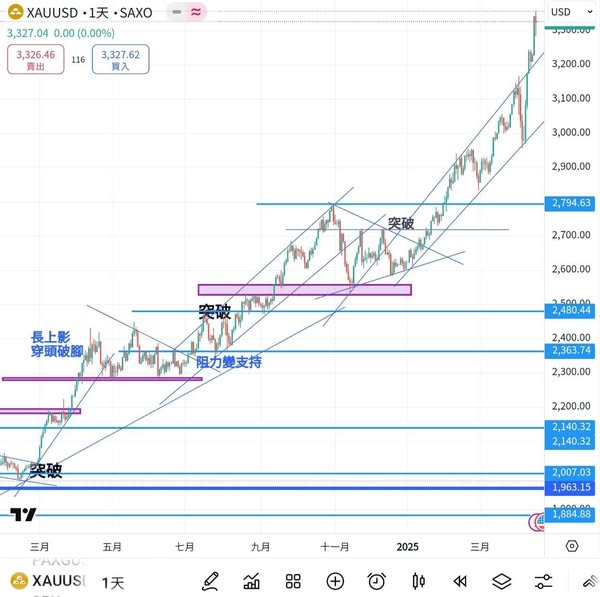
Last week, the gold price continued to be influenced by the tariff war and reached a new historical high. Capital flowed into the gold market in a frenzy for hedging. After breaking through the $3,300 mark midweek, it rose by over $100 for the day. The highest point of the week was $3,357.82. The upward trend slowed down before the Good Friday long holiday. At the beginning of the week, the gold price opened lower as the US indicated over the weekend that tariffs on AI, computer and other technology products could be reduced, which temporarily eased the pressure of the tariff war. However, the White House later clarified that these products would be taxed according to a new product list instead of being exempted. The gold price has since stabilized after fluctuating. As the tariff war intensifies, the market has begun to project two important directions: one is the change in the supply chain, and the other is the change in the financial war. The last time the supply chain was disrupted was due to the COVID-19 pandemic, which led to flight suspensions and a surge in prices, pushing US inflation to nearly 10%. At that time, the Russia-Ukraine conflict broke out, and the gold price rose sharply by 30% from 1,500 to nearly 2,000 US dollars. The tariff war is bound to cause significant changes in the global supply chain. Moreover, the tariff war shows signs of spreading. The US is studying the new IPO process of Chinese enterprises, and even listed companies may be affected. The US's insistence on revitalizing its industry will surely backfire. Under the new order, countries may worry that the US and US dollar assets are not as reliable as before, and the US dollar and US bonds will also be affected. Driven by risk sentiment, funds seek safe havens, pushing the gold price to rise sharply above $3,300. On the other hand, Trump's constant pressure on the Federal Reserve to cut interest rates and even rumors of firing Powell have also made the US dollar unstable. The upward trend of gold prices slowed slightly before the long holiday, but market sentiment remains quite unstable. Looking ahead to this week, the market may be relatively quiet at the beginning due to the Easter holiday, and there are not many economic data after the holiday. The market focus will continue to be on the negotiations of the tariff wars among various countries. The upward trend of gold prices is accompanied by overexcitement, and it is believed that the market will remain quite volatile this week. For market analysis, it is advisable to refer to each other.
2025-04-14
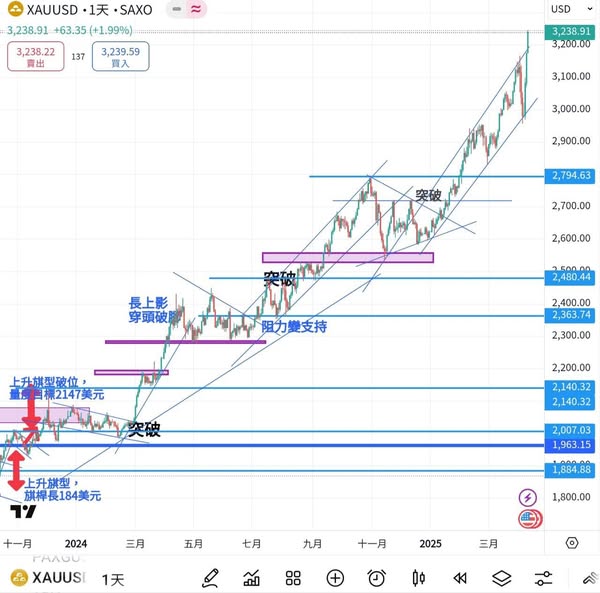
Affected by US President Trump's tariff policy, the global financial market was shaken, and the gold market was no exception. Gold initially fell but then rose, reaching a new historical high, with funds flowing into the gold market for safekeeping. Continuing the pullback trend from the previous week, gold prices still faced downward pressure at the beginning of the week. In the early stage, it broke through the $3,000 mark and dropped to $2,956, falling by more than $200 from its recent peak. US President Trump has extended the 90-day exemption period for the 10% tariff by 30 days to gain more time and leverage for negotiations. However, as China has already retaliated, no concessions have been made. The news briefly eased market pressure. But the trade war between China and the US, involving the world's two largest economies, leaves little room for other countries to maneuver. The market remains extremely concerned about the risks. Subsequently, the EU retaliated through a vote, and with China's countermeasures, the tariff rate has been as high as a ban, and the market risk sentiment is very high. The US dollar and the US stock market have been hit hard. Funds have once again flooded into gold for hedging. After the gold price broke through $3,000, it quickly rose above $3,100, and the rebound trend was very sharp. The most perplexing aspect for the financial market is that the trade war might escalate into a financial war. If the United States raises tariffs, it could alter the world order. Many countries have begun to lose trust in the United States and sell off its bonds. Europe, Japan, and China have all started to divest from US Treasuries. The United States has long relied on its military and financial power to support its nation. When the dollar, US bonds, and the US stock market all decline simultaneously, it indicates that global hot money is flowing out of the United States. If multiple countries abandon the US dollar and dollar assets, the United States will find it difficult to maintain its hegemonic position, and the dollar standard will collapse. Only gold can serve as a reserve to support the issuance of domestic currencies. As a result, gold prices received a stronger boost during the week. Coupled with the fact that the CPI and PPI data for the week were unexpectedly poor, indicating less inflationary pressure, it was favorable for the Federal Reserve to have more room to cut interest rates. Gold prices broke through the 3,200 mark before the weekend and closed at the week's high. Looking ahead to this week, there are not many economic data releases. The more significant one is the retail sales data in the middle of the week. However, the more crucial factor is the possibility of a financial war breaking out. If multiple countries continue to sell off US Treasuries, the US dollar and the US stock market will surely suffer another heavy blow. There is a high chance that funds will flow into gold for safekeeping, leading to a sudden surge in its price. On the contrary, if Trump shows more goodwill, the gold market may take the opportunity to give back the excessive gains of the past two days. Let's keep an eye on the market situation and refer to each other's opinions.
2025-04-07
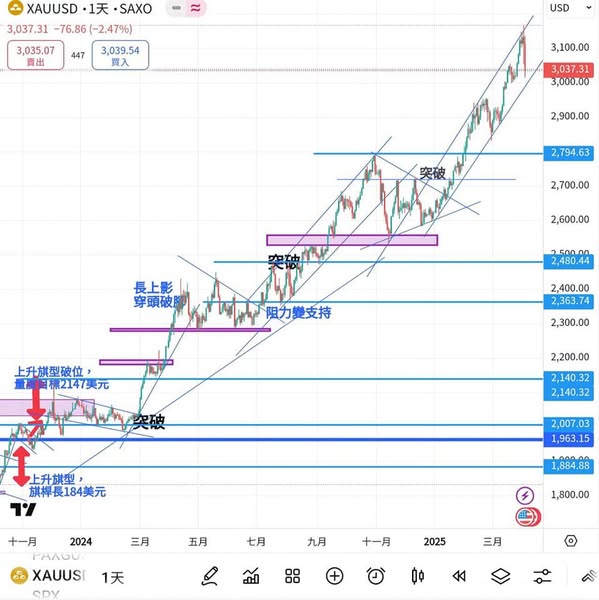
Last week, due to the US tariff war, the global financial market was in a mess. Gold once played its safe-haven role and rose sharply, but then fell back. The stock market, bond market, foreign exchange market and commodity market were all affected, experiencing severe fluctuations. Continuing the upward trend of the previous week, the gold price opened higher on Monday and broke through the 3100 mark, unstoppable. US President Trump said that on April 2nd, the tariff policy would be announced, imposing tariffs on countries around the world, and claimed it to be the liberation day of the United States. The trade war is about to break out. Capital flows into the gold market for hedging, and the rise slows down only when it reaches the pressure line of the ascending track. On April 2nd, Trump disclosed more details on tariffs, and tariffs were imposed on exports from many countries. Gold prices hit a record high of $3,167.65 in the Asia-Pacific region on Thursday. Later, it was constrained by the resistance line of the ascending channel. With the tariff policy already announced, the market sentiment of "buy on rumors, sell on facts" led to a sharp decline in gold prices to $3,057. Later, it rebounded to $3,130. The price fluctuation was significant. However, an even more volatile trend emerged on Friday. China announced countermeasures against all US original products with a 34% retaliatory tariff in the evening, which once again shook the global stock and bond markets. The gold market rose to 3130 but failed to stabilize. Another focus of the market was the performance of the US labor market. The non-farm payroll report showed an increase of 228,000, far exceeding expectations. The gold price fell below the intraday low again. What's worse, the chairperson of the Federal Reserve, Powell, turned hawkish on interest rates due to concerns that the tariff policy would trigger inflation. The gold price plunged to 3015 dollars, with a fluctuation range of 120 dollars. Other commodity prices also dropped sharply, with crude oil and silver recording a 7% decline. Looking ahead to this week, the trade war is at its peak and will continue to influence market sentiment. Therefore, it is expected that the gold price will remain volatile. The medium-term upward trend support line and the psychological threshold of $3,000 should not be lost; otherwise, the pressure to give back gains will increase. Moreover, there will be inflation data before the weekend, and there is a serious divergence in the current direction of interest rates. Powell wants to maintain high interest rates, but the market is also concerned that a recession will force the Federal Reserve to cut rates further. This week's CPI and PPI data will provide significant insights into inflation. Let's take a look at the market situation and share our views.
2025-03-31
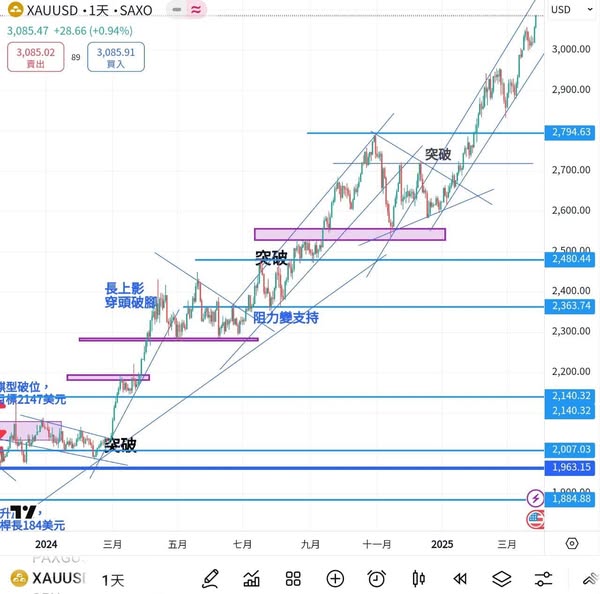
Last week, the gold price continued to be hot, reaching a new historical high for the 18th time this year and closing at a full week high, approaching $3100, with a breakthrough imminent. At the beginning of the week, the gold price first consolidated, continuing the previous week's rebound trend. The gold price did not stabilize above 3020 and briefly tested the $3000 mark, reaching a low of $3002.48 for the whole week. After stabilizing the psychological barrier, the US tariff policy stimulated funds to flow into the gold market again. Trump signed a notice on Thursday to implement import tariffs on automobiles and threatened to impose even harsher punishments if the EU and Canada work together to harm the US economy. The market is highly concerned about the equivalent tariffs that will be implemented on April 2nd, and funds are flowing into the gold market as a safe haven, helping the gold market reach new highs. After breaking through 3050, the upward momentum was like a rainbow. Although the PCE inflation data on Friday evening was in line with expectations, it did not significantly affect the Federal Reserve's interest rate expectations and had little impact on market conditions. Gold prices continued to hit new highs over the weekend and closed close close to the week's high, reaching a weekly high of 3086.78. This week, tariff policies and labor market performance are the focus of the market, and gold prices are about to break through 3100. Although the upward trend is too rapid, the tone is still good. Let's take a look at the market situation and refer to each other.
2025-03-24
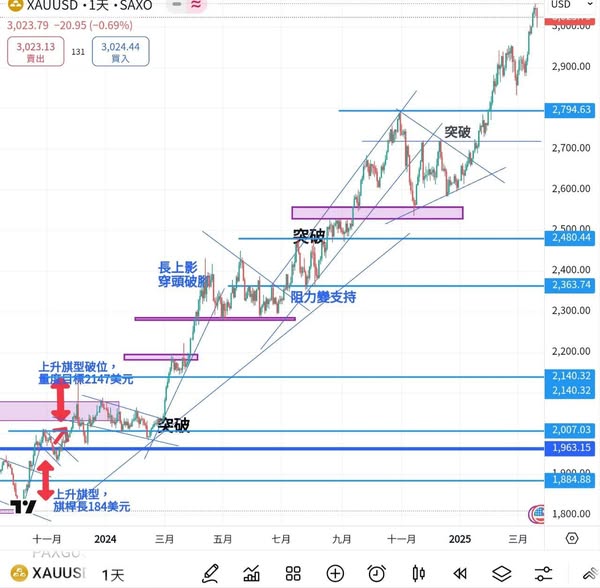
Last week, the gold price remained stable at 2980 and gained momentum for improvement. The market continues to shift funds to the gold market due to uncertain factors such as Trump's tariff policies and trade wars, highlighting the important role of gold as a safe haven currency. In addition, the market has long expected that the upward trend of gold prices will not end, so the 3000 mark can be easily broken in one fell swoop. After rebounding above 3000 at the beginning of the week, it continued to stabilize, and investors are waiting for the Federal Reserve's interest rate meeting on Monday. The market has long expected the interest rate to remain unchanged at this meeting, but with the slowdown in the labor market and inflation, everyone hopes that the Federal Reserve will release a dove and provide clearer guidance on the direction of interest rates in 2025 and the cycle of interest rate cuts. As expected, although the interest rate remains unchanged at the mid week meeting, the direction is dovish. It is expected to cut interest rates twice by 0.25 percentage points before the end of the year, and the total interest rate for the year will be reduced by another half percentage point. The chance of interest rate reduction in July or earlier will increase to 100%. The interest rate clearly stimulated the gold price to break through the peak again, reaching a maximum of $3057.42, which is also the 15th record high since the beginning of this year. On average, there is an opportunity to climb high again every week, which is a typical bull market development. Prior to the weekend, there was profit taking in gold prices, with liquidation pushing them down to below $3000 at one point, but then quickly rebounding to close at $3023. At present, apart from the overbought pressure on gold prices, the overall news supports the preference for gold prices, and there is a possibility of consolidation and better storage near the $3000 mark. Looking ahead to this week, the United States will release the PCE Price Index, which has implications for inflation levels. If, like the previous CPI, inflation remains moderate, it will increase the Federal Reserve's leverage to cut interest rates, and gold is expected to improve again. Let's take a look at the market situation and refer to each other.
2025-03-17
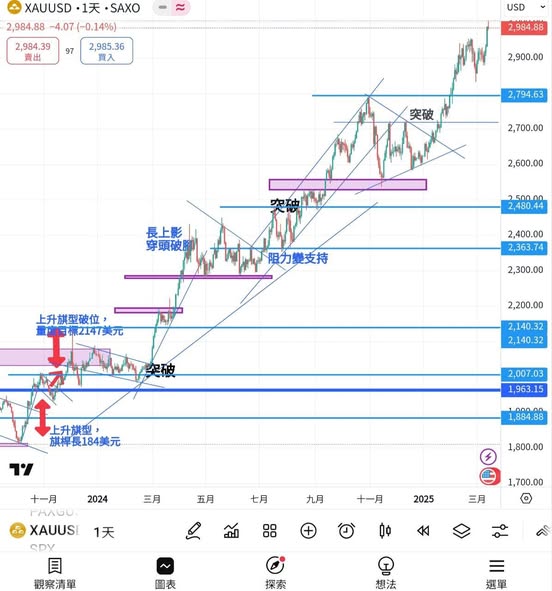
Since its opening in 2025, the gold market has risen by 10% and hit a new historical high 13 times, continuing the bull market trend. Last week, the gold price experienced a pullback in the early stages, falling below the $2900 mark, but the magnitude was not significant. The market focus is on the inflationary pressure in the United States. As the labor market has slowed down, investors are hoping that the Federal Reserve will have more room to cut interest rates. However, the key is the current trade policy in the United States. Trump's tariff measures will increase inflation levels, so whether interest rates can be reduced still depends on the level of the commodity price index. The CPI released by the United States in the middle of the week was 3.1%, while the core CPI was 0.2%, both lower than expected. Inflation has fallen, reducing the obstacles for the Federal Reserve to further cut interest rates. After stabilizing at 2900, gold prices have risen rapidly and even surpassed the 3000 mark on Friday, marking the first time in history. Although there was some vomiting on the day, there was no sign of a reversal in the mid-term upward trend. Looking ahead to this week, the US tariff policy continues to trouble market sentiment, and the safe haven atmosphere will support the performance of gold prices. Another focus is the Federal Reserve's interest rate meeting, which is expected to maintain the interest rate unchanged, but the post meeting statement may pave the way for the next interest rate meeting. If a dovish signal is issued, it will support gold prices to break through again. In the medium to long term, many major banks have raised their gold future targets, with most generally expecting between 3500 and 4000, and the market atmosphere remains optimistic. Let's take a look at the market situation and refer to each other.
2025-03-10
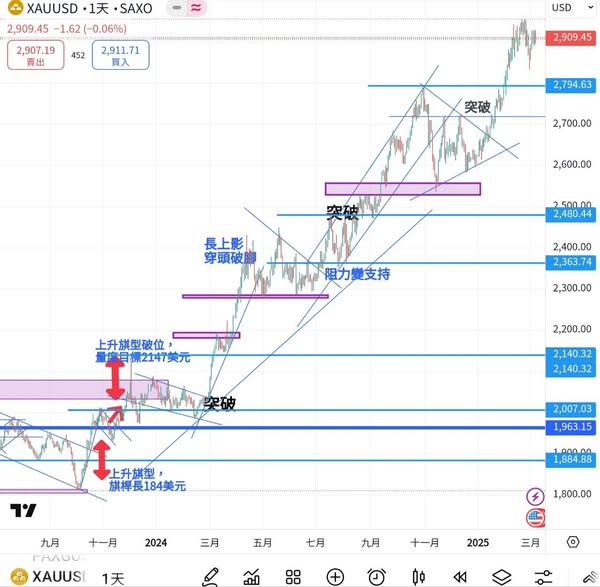
Gold rose for 8 consecutive weeks before giving up for a week, and then climbed again last week. As soon as the market opened at the beginning of the week, there was a surge of buying interest, continuing the rebound trend of the previous weekend. The gold price stabilized above 2850 in the early stage, and domestic demand fluctuated around the 2900 level multiple times this week, but all were able to maintain the support of 2880 and maintain the opportunity for upward momentum. The focus of the week was on labor market data, with a small non farm payroll ADP limit of only 77000 in the middle of the week, significantly lower than expected. The market is concerned that the US economy may begin to slow down; Friday night's non farm payroll data also fell short of expectations, reporting 151000 people. The slowdown in labor market growth has made it even more urgent for the Federal Reserve to cut interest rates to stimulate the economy. The probability of interest rate cuts at the June Federal Reserve meeting has risen to 70%, and gold prices have returned to their 2930 week high, but unfortunately have not broken through. On the other hand, Federal Reserve Chairman Powell's hawkish stance also scared the market at one point. He believes that whether to continue easing monetary policy needs to pay attention to more economic signals. This caused quite intense market changes that evening, with gold prices fluctuating rapidly and struggling to maintain balance. Eventually, they gave up on the US dollar and stabilized above 2900, holding the market. The US dollar experienced a significant pullback last week, hitting its biggest weekly decline in nearly 16 years. The market still believes that US interest rates will fall in the long run, which has led to a decrease in the attractiveness of the US dollar. Looking ahead to this week, inflation data has significant implications for US interest rates. If CPI continues to rise, like Powell's remarks, the future direction of interest rates will be more hawkish. If inflation is moderate, the Federal Reserve will have the leverage to cut interest rates to support the economy. Let's take a look at the market situation and refer to each other.
2025-03-03
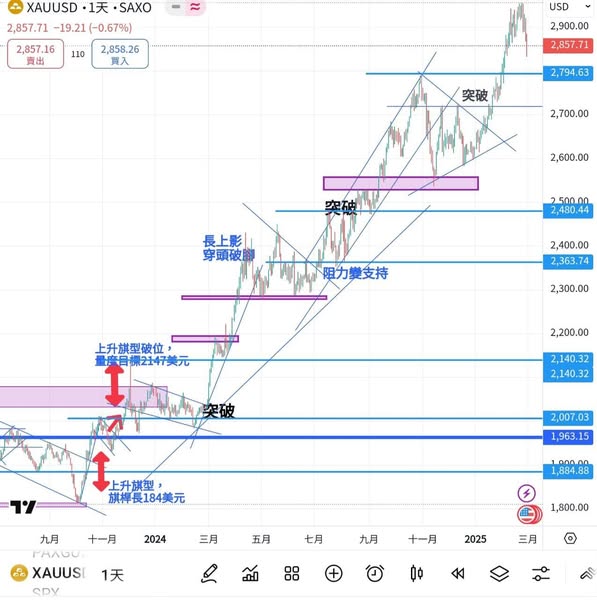
After 8 weeks of continuous rise in gold, technically, it is severely overbought. Last week, it borrowed strong US dollars and was heavily sold off by profit taking liquidation orders. At the beginning of the week, the gold price was unable to break through, and most investors hoped that the gold price would soon break through the 3000 mark. However, after hitting a new high on Monday, it still could not stabilize above 2950, causing buyers to be wary of high levels. Later, US President Trump announced the scheduled 25% tariff on Canada and Mexico on March 4th, and an additional 10% tariff on China. The market's expectations for the temporary suspension of tariffs were dashed, and the US dollar was sought after by funds and strengthened, gradually putting pressure on gold. On the one hand, the market believes that prioritizing the United States will be beneficial to the US economy. If there is a trade war, the US dollar will still be a safe haven for funds and is worth docking; On the other hand, after increasing tariffs, there is a greater chance of triggering inflation, and the Federal Reserve tends to have less room for interest rate cuts in the future, even reversing and starting to raise interest rates, which greatly boosts the performance of the US dollar. After repeatedly testing below 2900, the gold price finally fell before the weekend and only rebounded after falling to 2832 on Friday night. Overall, it has not yet deviated from the selling trend. Looking ahead to this week, the upcoming tariffs and the opportunity for the European Central Bank to cut interest rates will boost the performance of the US dollar, with Friday night's labor market data also being a key focus. The market has repeatedly postponed the expectation of a US interest rate cut because the US labor market has never worsened. If the non farm payroll figures can remain above 140000, it is believed that the Federal Reserve does not need to cut interest rates, and may even consider maintaining high interest rates for a longer period of time to prevent inflation, which will also affect the performance of gold prices. Looking at the market, we can refer to each other.
2025-02-24
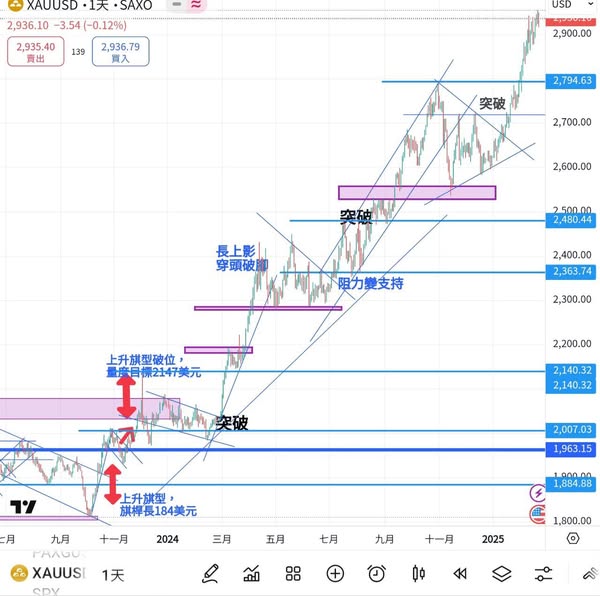
Gold shows the longest upward trend in recent years, and the fundamentals support the mid-term upward wave. Since the Russian-Ukrainian war, gold has become an important resource for central banks in various countries. The United States cut off Russia's use of swift to sanction Russia, and the international community has realized that there are major concerns about the US dollar as the world's settlement currency, especially in countries with trade disputes with the United States. The United States sanctions are seven-wound boxing, which harms both people and themselves. China has increased its holdings of gold for more than a year, and reduced its holdings of US debt, which has promoted the international rush to buy gold. Official demand has driven private demand, and the market demand for gold has increased. Coupled with the fear that the implementation of tariffs in the United States will affect gold, make London's coffers empty and transfer to the North American market, speculative buying also supports the gold price to hit record highs. There was not much economic data last week. Although the Fed intends to keep interest rates high for a longer period of time, it did little harm to the price of gold. After the middle of the week, the gold price remained above 2900. Although it failed to conquer above 2950, the rate of retreat was not large, and it maintained a trend of rising and falling. Looking forward to this week, the United States will announce the PCE price index. At present, the Fed tends to maintain high interest rates to prevent inflation from rekindling. The weekend data will provide more clues about the price level. If inflation rises again, the Fed's next move may not be to cut interest rates or even raise interest rates, which will bring a test to the upward trend of gold. The market situation is a bit different, so let's refer to each other.
2025-02-17
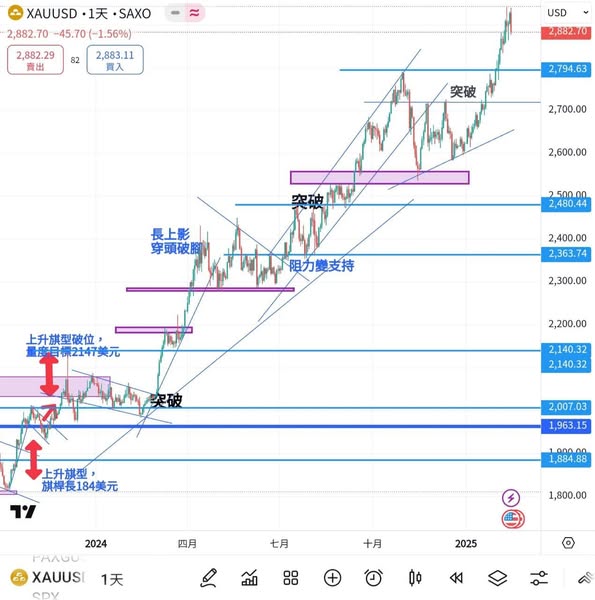
After the gold price continued to rise last week, it has set a record for the longest consecutive rise in recent years. Since the sharp rise at the end of last year, the gold price has risen by more than 300 US dollars, with a cumulative increase of more than 10%. The market continues to digest the tariff policy of the United States, and investors are worried about a trade war, prompting funds to flow into the precious metals market to avoid risks. After breaking through the 2900 mark at the beginning of the week, the gold price repeatedly reached a high of 2942.72 US dollars, and the market highly expects the gold price to break through the 3000 mark soon. However, before the challenge of 2950, the high level began to repeat, and the CPI and PPI released by the United States were higher than expected, and inflation had a chance to rekindle. The market expects that the timing of the Fed's further interest rate cut will be further delayed until September, and it is possible to maintain a high interest rate environment in the past six months, which is not good for gold prices, thus hindering the development of high gold prices. Even if the retail sales were as low as -0.9% on Friday night, the support for gold was limited. The price of gold was unable to challenge the high level and fell below the 2900 mark. Although it maintained an upward trend throughout the week, the trend was more repeated, from unilateral rise to large-scale ups and downs. Looking ahead to this week, there is not much economic data, but there is a record of last month's interest rate meeting in the middle of the week, which has some enlightenment for the rest of the Fed's meeting this year. Investors are seeking whether the Fed has changed its eagle, stopped cutting interest rates or even restarted the pace of raising interest rates. If the Fed has more directors to change their eagle, gold may take advantage of the situation to have more retreat. The market situation is a bit different, so let's refer to each other.
2025-02-10
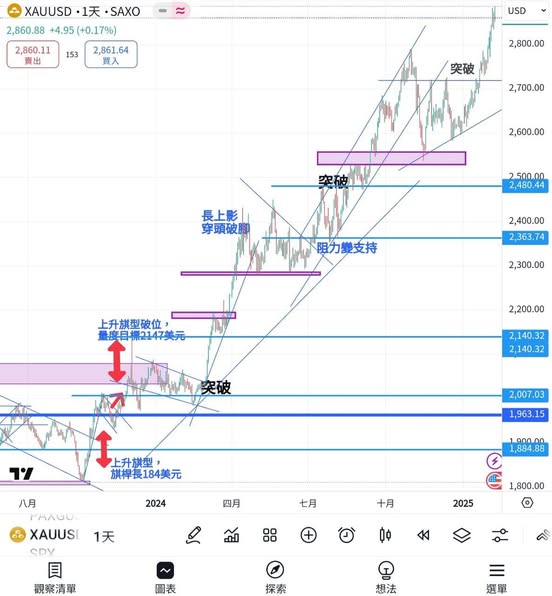
Last week, the price of gold fell first and then rose as scheduled, reaching a high of $2,886.77, and the market highly expected the $3,000 mark. Influenced by Trump's announcement of tariffs on Canadian, Mexican and China last week, the price of gold had seen a correction in the previous weekend, and it was under pressure on Monday. The price of gold fell as low as $2,772, and rebounded rapidly after the period. Although the tariffs of Canada and Mexico were suspended, the two countries had already begun to prepare for the start of a trade war. Canadian President Truff even described Trump's attempt to annex Canada as no joke and the relationship became tense. In China, due to the impact of the 10% tariff, the China government has also actively countered it. It is expected that the trade war will continue to disturb market sentiment, and it will be easier for funds to flow into the precious metals market to hedge, thus supporting the gold market to break the top. Looking back at Trump in the 1900s, during the first trade war, the price of gold started at $1,160 and once rose above the $2,000 mark, with an increase of 80%. As a warning, funds were more likely to flow into the gold market, and gold was robbed from the British treasury to the United States. It is believed that central banks in various countries may gradually increase gold as central bank reserves, which supported the long-term upward trend of the gold market. Another focus of the market last week was the performance of the US labor market. After Thanksgiving and Christmas New Year's Day, the labor market slowed down, and the non-agricultural growth rate narrowed to 143,000 person-times, which was worse than last month and expected. The gold price once took advantage of the situation on Friday night and then broke the top, which shows that the underlying capacity is still sufficient. The probability of the Federal Reserve's interest rate cut in March is only 25%. The high interest rate environment may hinder the upward trend of gold prices, but every time it takes advantage of the situation, there may be an ideal market entry price. Looking forward to this week, the United States will announce CPI and the chairman of the Federal Reserve will attend the hearing and give a speech, saying that both of them have implications for the Fed's interest rate at the end of the year and need attention. The market situation is a bit different, so let's refer to each other.

2025-01-13
Last week, the focus of the market was originally on the performance of the US labor market, but the British debt was brewing a foreign exchange crisis, and the pound fell to a one-year low. The market was worried about the recurrence of the 1976 debt crisis, and funds flowed into the safe-haven market, including the US dollar and gold. Therefore, this week, the US dollar and gold showed an upward trend simultaneously. At the beginning of the week, the market resumed normal trading in a strong holiday atmosphere. As the US labor market is expected to remain strong, gold was sold in advance. Traditionally, November and December are Thanksgiving and Christmas holidays, and the booming retail market will drive the labor market data. It is expected that the non-agricultural sector will perform well, and the gold price will be pressed to $2,614.66 in advance. After the period, it improved step by step. Although both non-agricultural and small non-agricultural industries performed well, funds continued to flow into the gold market to hedge, and the price of gold rose for four consecutive days from Tuesday. British debt fell for five consecutive days last week, with the 10-year yield hitting a new high after the 2008 financial tsunami and the 30-year yield hitting a new high in 98 years. The market has lost confidence in the British government's control of national debt and inflation, and the ratio of debt to GDP has reached a new high since the 1960 s. Investors must hedge against this. And transfer funds to safe-haven markets such as the US dollar, US debt and gold. On Friday, after the strong non-agricultural data was once suppressed to $2,664, the gold price was again sought after by funds, rising to a maximum of $2,697, approaching the 2700 mark and closing at a high level. Looking forward to this week, the British debt crisis is still fermenting. On the other hand, Trump's upcoming appointment is also the focus of the week. In terms of data, you can pay attention to the CPI in the middle of the week and the retail data of the next day. The gold price has destroyed the double-top pattern in the short term, and there is a chance to challenge the previous wave top again. However, the British debt crisis will make the market situation fluctuate rapidly, so we can pay attention to the market entry position and grasp the short-term operation space. The market situation is a bit different, so let's refer to each other.
2025-01-06
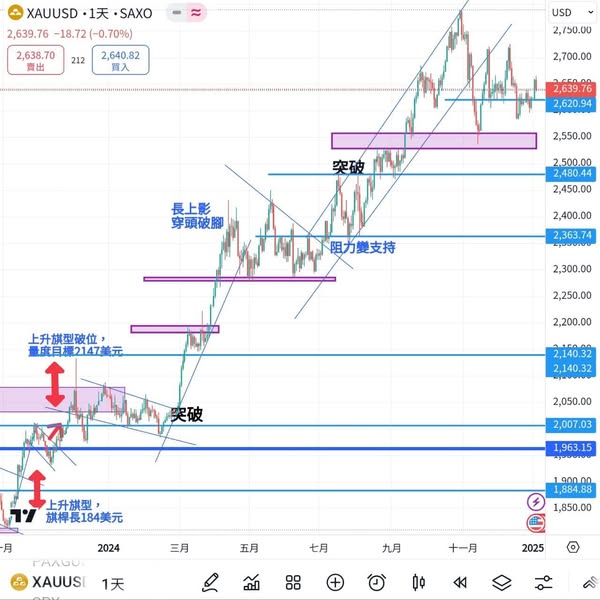
Last week, the price of gold fell first and then rose, and continued to be troubled by the Federal Reserve's interest rate cut of only half a percentage point in 2025. The price of gold only developed steadily before the end of 2024, failing to continue the big upward trend in November. In 2024, there was a huge increase, which also put great pressure on profit-taking. Before New Year's Eve, the price of gold once fell below the 2600 mark, and the lowest price in the whole week was $2596.11. However, the low level is supported by buying, driven by geopolitical risks, and funds flow into the gold market. In the early morning of Wednesday, Russian drones attacked Kiev, and Israeli troops also attacked a suburb of Gaza. Under the light trading day near New Year's Day, the news gave an extra boost to the market, and the price of gold broke through, reaching a peak of 2665.24 for the whole week, and then fell back on Friday. In addition to the surge in gold, the US dollar index also showed strength. Trump will take office on the 20th, and will implement tariffs, which will give a good chance to trigger a trade war, support the development of American exchange, and the inflation caused by tariffs will also make the Fed need to maintain a high interest rate environment. The weighted index of American exchange is stable at 108, and the high price of gold is more vulnerable to pressure. Looking forward to this week, the United States will release a series of labor data, including Friday night's non-agricultural, to observe whether the United States is in a recession crisis. In addition, there was a record of last month's interest rate meeting on Wednesday. If the record supports hawking, the price of gold may be under pressure again. The market situation is a bit different, so let's refer to each other.
2024-12-30
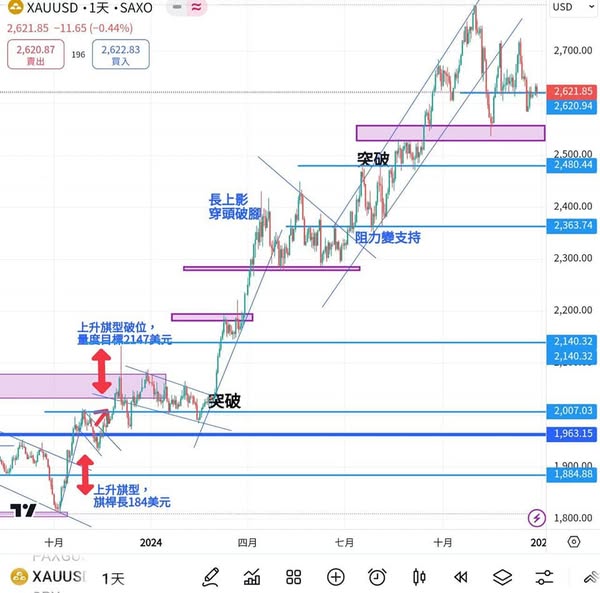
Since last week was a Christmas holiday, the major markets in Europe and America were closed, and many trading days have already started to take vacations, the trading volume was relatively light, and the gold price fluctuated only in the range, and the ability to break up or down was not high. At the beginning of the week, following the rebound trend of the previous week, the low price of gold continued to stay above 2600, hovering around 2620, and the trend was tepid. After the Christmas holiday, it once rose to a full-week high of 2639, but it was unable to succeed, and then fell back to 2620 again on Friday. The market is not strong enough to walk out of the recent trading range, and the market is still digesting the limited interest rate cut by the Federal Reserve in 2025, which is different from the rapid interest rate cut in the early part of the interest rate cut period, and the market has the opportunity to maintain the high interest rate level for a longer time. This is undoubtedly a certain obstacle to the rise of gold. Looking forward to next week, the holiday atmosphere will remain strong and trading will be relatively light. The more important economic data is the ISM manufacturing PMI index on Friday, and 50 is the dividing line between profit and decline. If it is higher than 50, it will indicate the development of the US dollar. The market situation is a bit different, so let's refer to each other. I wish you all progress in the New Year and a satisfactory harvest in 2025.
2024-12-23
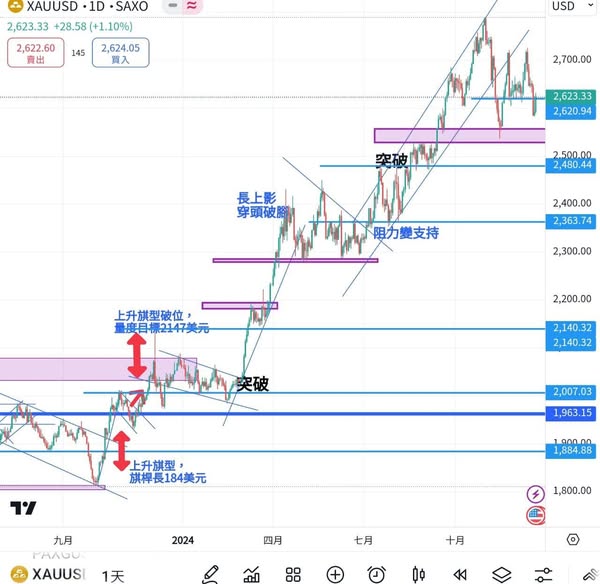
Last week, the market focused on the Federal Reserve's last interest rate meeting this year. It was widely expected that the interest rate would be reduced by 0.25% after the meeting. However, the statement and bitmap after the meeting are expected to bring enlightenment to the interest rate process in 2025. Global investors are looking forward to guidance, so they held their breath at the beginning of the week. Some time ago, the price of gold hovered around 2650, waiting for the interest rate. On Wednesday night, I saw the Federal Reserve cut interest rates by one yard, but after the meeting, it announced that it was a big eagle. The bitmap shows that interest rate cuts are limited to two times in 2025, which is less than expected in September. Interest rates have the opportunity to stay at a high level for a longer period of time, which has increased the cost of gold holders. The price of gold fell sharply that night, and fell below the 2600 mark, and the lowest price was 2583 before it began to rebound. On Friday night, the PCE price index released by the United States reported 2.8%, which was lower than expected, rekindling the expectation that the United States still needs to cut interest rates. Only before the weekend did the gold price rebound more strongly, and the gold price once reached the level of 2630. Although the market situation declined throughout the week, the non-unilateral market plummeted, and there were many opportunities for ups and downs. Looking forward to this week, the Christmas holiday is approaching, the transaction will begin to decrease, and the market will continue to digest the pace of interest rate reduction in 2025. The market situation is a bit different, so let's refer to each other. I wish you all a happy winter solstice and a merry Christmas.

2024-12-16
After a week of low prices, the price of gold rose and fell sharply last week. As soon as the market opened at the beginning of the week, the price of gold began to rise. After breaking through the top 2650 of the horizontal range in the previous week, buying continued to be sought after. 2610 has become a short-term support in the past two weeks, keeping the psychological barrier of 2600 steady and pushing technical buying in the direction of 2700. In the middle of the week, when the gold price broke above 2700 again, the inflation data released by the United States was similar to that expected, and it was relatively moderate. The CPI reported 2.7%, and inflation did not worsen. I believe that the interest rate reduction process in the United States will continue. This week, the opportunity for the Federal Reserve to cut interest rates rose to 97%. Under the high expectations of the market, the gold price rose to a full-week high of 2726.15 before falling back. However, it continued to retreat before the weekend, and fell below the 2700 mark, almost all the gains in the whole week were retreated. The volatility of the whole week was huge, but the closing price was only slightly higher, indicating that the high position was insufficient. Looking forward to this week, the Fed meeting is the focus of the whole week, and it is almost a foregone conclusion to cut interest rates by 0.25%. The market will also pay attention to the bitmap and guess the interest rate forecast in 2025. Since Trump has clearly expressed the protectionism of increasing tariffs, it is believed that it will bring a crisis to inflation, which may narrow the space for interest rate cuts in the United States, thus suppressing the momentum of rising gold prices. The results of bitmap will provide more enlightenment. The market situation is a bit different, so let's refer to each other.
2024-12-09
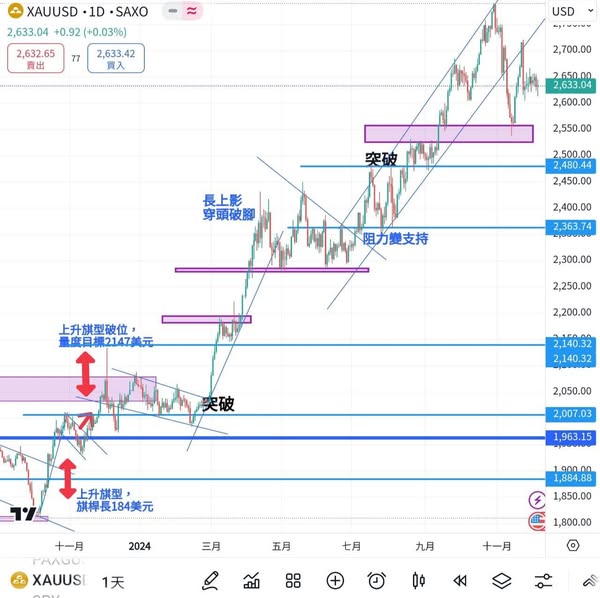
Last week, the price of gold was rampant, subject to the resistance of 2650, and it failed to break through many times. The performance of the labor market was tepid, and the market's expectation of the interest rate reduction process was not changed, which supported the buying of the low price of gold. The top and bottom failed to break through, limiting the trend of gold. In the middle of the week, the number of ADP employees announced by the United States was 146,000, which met the expectation. After a period of shock, the gold price was unable to break. On Friday night, the non-agricultural report was 227,000, which was slightly better than expected. The gold price turned to a low level, but it did not leave the recent active trading range and was supported below 2620. At present, inflation is under control, and the general direction of the Fed is still to reduce interest rates, but the extent may not be as strong as expected earlier. In addition, President-elect Trump has the opportunity to raise tariffs after taking office, which also raises the risk of inflation and even forces the Fed to maintain high interest rates for some time, which hinders the gold price from breaking through this year's new high. Looking forward to this week, the United States will release CPI and PPI inflation data. The latest interest rate futures still show that the Federal Reserve will cut interest rates by 0.25% this month. However, after this interest rate cut, there is a big disagreement in the market. In the future, we still need to pay attention to inflation and economic performance, so CPI is particularly important. The market situation, might as well refer to each other.
2024-12-02
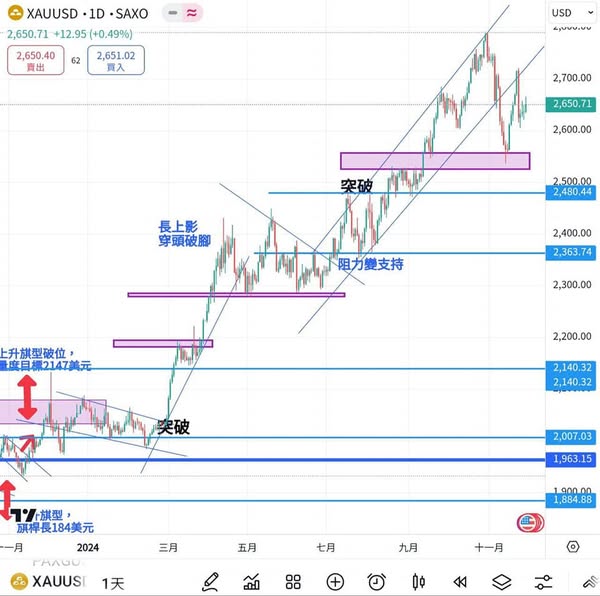
Last week, the price of gold fluctuated greatly. As soon as the market opened on Monday, the price of gold fell sharply, falling by more than one hundred dollars in a single day. After falling below the 2700 mark, it forced the 2600 mark. Fortunately, it found support to rebound in 2605. The geopolitical risk events in the middle of the week also supported the stabilization of gold prices. Both Israel and Palestine accused each other of violating the agreement, and the market continued to have capital inflows to hedge, but Trump Trade was more dominant in the market. US President-elect Trump suspected of increasing tariffs. The news stimulated the market to rekindle expectations of inflation and lowered the prospect of interest rate cuts, which made the price of gold rebound but failed to stabilize. Looking forward to this week, there are a number of economic data released, including small non-agricultural enterprises in the middle of the week and small non-agricultural enterprises on Friday. The labor market shows signs of deterioration, and the Christmas holiday is approaching. If the number of new jobs in enterprises remains sluggish, the risk of recession will rise. The demand for interest rate cuts in the United States will increase in December, which will depress the dollar. In addition, Federal Reserve Chairman Powell will deliver his last public speech before the silent period, which is believed to bring inspiration to the interest rate discussion this month and even the interest rate in 2025, which deserves attention. The market situation is a bit different, so let's refer to each other.
2024-11-25
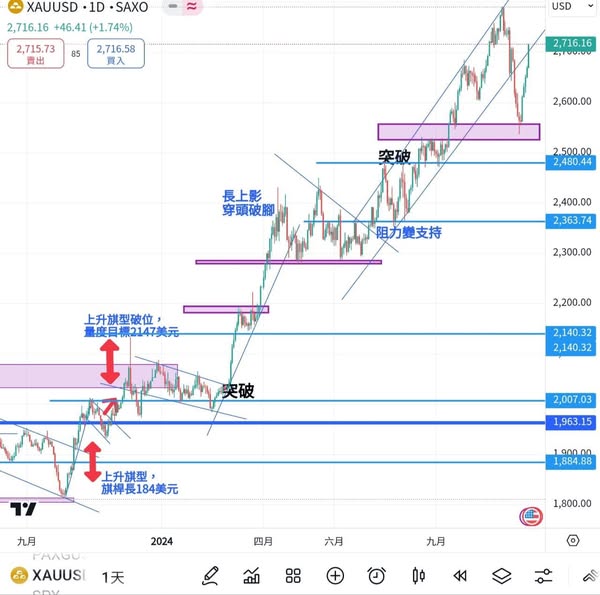
Last week, gold never looked back and rose day by day. Due to the lack of important economic data, it was seen in the early part of the week that the gold price benefited from the support of key structure and began to rebound. After breaking through 2600, it will stabilize. The Russian-Ukrainian war lasted for nearly three years, and Ukraine had no countermeasures, but Russia failed to completely capture Ukraine. Keep wasting. Russian President Vladimir Putin signaled the possibility of using nuclear weapons, and the news shocked the market. Gold plays the role of a fund refuge, and funds flood into the gold market to avoid risks. After the middle of the week, the price of gold rose by more than 100 yuan, completely recovering the previous week's decline, and closed at a full-week high of 2715 before the close, showing its strength. This week, after the middle of the week, it is a Thanksgiving holiday in the United States. It is expected that trading will be quiet before the weekend, but there is a record of the Fed's last interest rate meeting in the middle of the week. At present, the probability of reducing interest rates in December is only over 50%. I believe that the last meeting had a very important revelation, which may have a greater impact on the sluggish market. The market situation is a bit different, so let's refer to each other.
2024-11-18
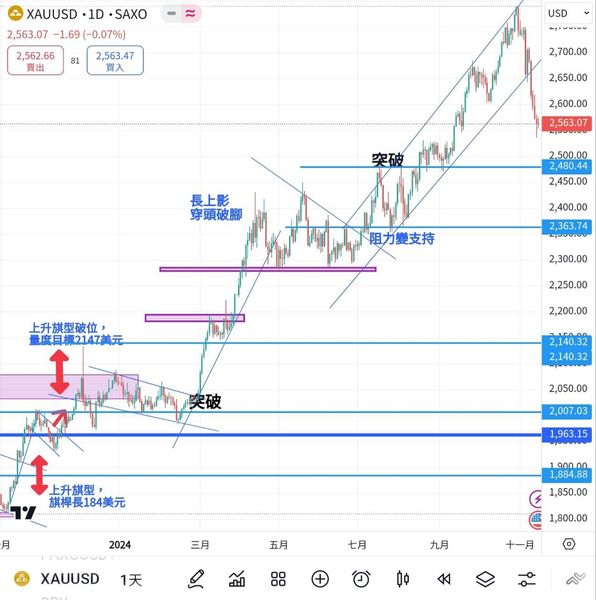
Last week, the price of gold plummeted, and the dollar soared thanks to the Trump trade- Trump transaction. The gold denominated in dollars was the first to bear the brunt. In addition, the demand for safe haven dropped sharply and the demand for gold fell, which made the price of gold even worse. At the beginning of the week, the price of gold was weak enough to go up to the 2700 mark and go down to 2600. In the middle of the week, I saw that the CPI released by the United States was the same as expected, and inflation did not rekindle. After a slight rebound, the price of gold continued to be under pressure, and it fell below the 2600 mark and fell to a full-week low of 2536 on Thursday night. Federal Reserve Chairman Powell said in a speech that there is no need to cut interest rates sharply in the United States at present. The market believes that the expectation of a sharp cut in interest rates at the beginning of the year has failed, and the United States will maintain high interest rates for a long time, making it difficult to maintain the gold price. That is, the city is subject to the 2580 mark, and it is difficult to recover above the 2600 psychological mark. Looking forward to this week, short-term technical trends are mixed due to falling below the medium-term upward track. Fundamentally, there are few important data. The market is still digesting the stimulus brought by Trump's appearance, and the market trend may be more urgent. For the trend, please refer to each other.


