
 en-US
en-US 

 Telegram
 WeChat

2024-04-23
Since the CPI in the United States was uncovered in March, the expectation of interest rate cuts in June has continued to cool down. In addition, Federal Reserve Chairman Powell said on the 16th of this month that the latest data shows that inflation shows no obvious signs of slowing down for the time being. If necessary, the current monetary policy can be maintained for a longer period, suggesting that interest rate cuts will be delayed. Reasons for delaying interest rate reduction: Inflation: Not returned to the target level. Market: US stocks and the property market continue to rise, reflecting that the financial pressure in the United States is not tense. Employment: According to the current employment vacancy rate is still higher than that during the epidemic period, it is difficult to touch the interest rate reduction that reflects the good employment situation. Residents' burden: Although the United States has repeatedly raised interest rates, the burden of interest on mortgage repayment is mainly on newly-built mortgages. On the other hand, there is little pressure on existing lenders to bear the rising interest expenses. Asset price: The US property market has rebounded, and the US stock market is still at a high level. The return on wealth of American residents is attractive, and the confidence against interest rates is strong. Impact of maintaining high interest rates: The Asian financial turmoil may return. Recently, Japan, South Korea, Vietnam, Indonesia, Malaysia, India, Thailand, etc. have all seen the triple whammy of foreign exchange, stock and debt, indicating that they should intervene in the foreign exchange market when necessary. However, once the foreign exchange reserves are exhausted, the national economy will be on the verge of collapse. The high interest rate in the United States has increased the interest burden of the federal government and individuals. The bank bankruptcy crisis at the beginning of last year may once again trigger the recent S&P downgrade of five US regional bank stocks to a negative outlook. In addition, under the high interest rate, the price of US debt will inevitably fall, and the newly issued national debt will be more difficult to sell. The government must pay a higher coupon rate in advance before it can borrow money to continue its life.
2024-04-17
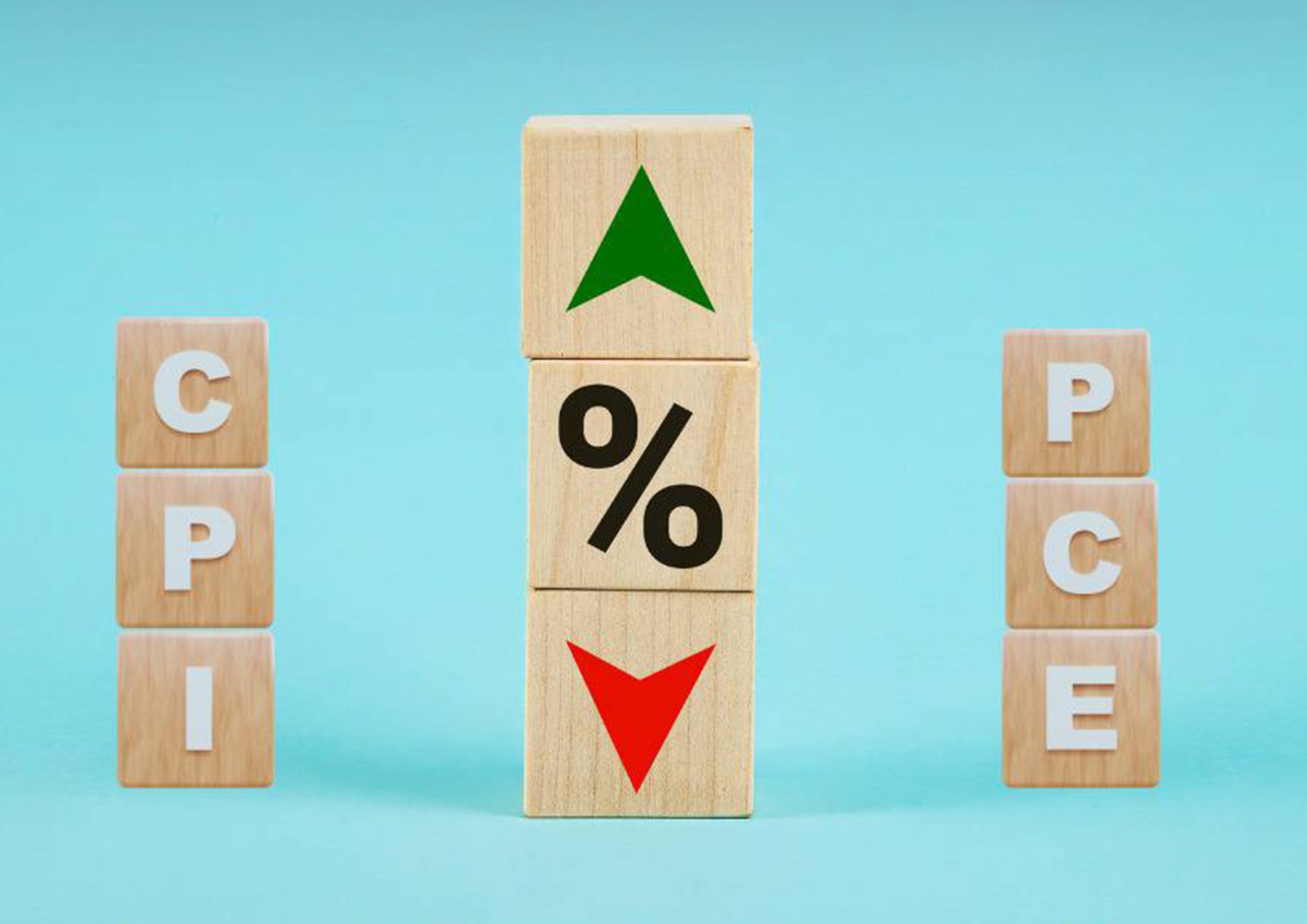
CPI and PCE around the fed to cut interest rates! ? The Fed uses inflation data indicators to judge the current market situation and decide the monetary policy that should be adopted. Among many inflation indicators, CPI and PCE are the most influential: What is CPI? The consumer price index (CPI) of the United States is published once a month by the Bureau of Labor Statistics (BLS). Through the household questionnaire survey, the consumer's household purchase status is known, which covers the cost of purchased goods or services. What is PCE? The price index of personal consumption expenditure (PCE) is published once a month by the Bureau of Economic Analysis (BEA) of the United States. The survey includes household and business expenditures, covering out-of-pocket expenses of purchased goods or services+other expenses not paid out of pocket (such as claims paid by insurance companies). Core CPI & Core PCE Core inflation index is an inflation index made by deducting the goods (e.g. energy, food) that are particularly sensitive to prices from the original range of goods and services, and excluding the goods whose prices change greatly temporarily due to environmental, political and other factors. Therefore, it can better represent the actual inflation degree, and the inflation index that has not been deducted will be more stable. What is the difference between PCE and CPI? PCE covers a wider area than CPI. PCE survey method is business survey and CPI is family questionnaire survey. PCE's item classification weight will be dynamically adjusted every month to avoid the sudden surge of a single commodity affecting the overall index CPI, and it will be updated every two years. For the average consumer, CPI is closer to reality, and it is also used as a reference to measure the inflation of many financial commodities. The Fed is most concerned about PCE, especially the core PCE.
2024-04-09
Gold, US stocks, US dollar, breaking the law? ! The general law of the market is that stocks, the dollar and gold cannot rise or fall at the same time Us stocks strengthened and the dollar weakened The dollar strengthened ️ gold prices fell The dollar fell as gold prices strengthened But stocks, gold and the dollar are all strong at the same time The Dow is nearing 40,000, up three times from 13,000 12 years ago Gold hit a record high of 2,300, up more than 40% from around $1,700 12 years ago The dollar index is near 105 versus around 83 in 12 years, up about 25 percent over that period It is true that the chances of all three rising together are small, but it is also possible that the important point is that the market is not only the U.S. stock, gold and the dollar options Reasons for the strength of US stocks That compares with the outlook for stock markets in other countries Add to that a positive outlook for US corporate earnings; Revolutionary technologies are born, such as AI, and the Federal Reserve will begin the pace of interest rate cuts Reasons for the strong dollar Projected by weakness in other major currencies Both the dollar and gold are seen as safe havens by the market, and money flows into the dollar and gold, respectively, when the economy is worried and the stock market is falling Reasons for gold strength Even if the strong dollar is not good for gold prices, the rising gold price will suppress the dollar, but the actual situation is that the rotation of rising ️ makes both of them maintain strength The law that gold stock exchange cannot rise at the same time is just a blind spot in the market, and the key is that funds can flow into these three assets at the same time.
2024-04-02
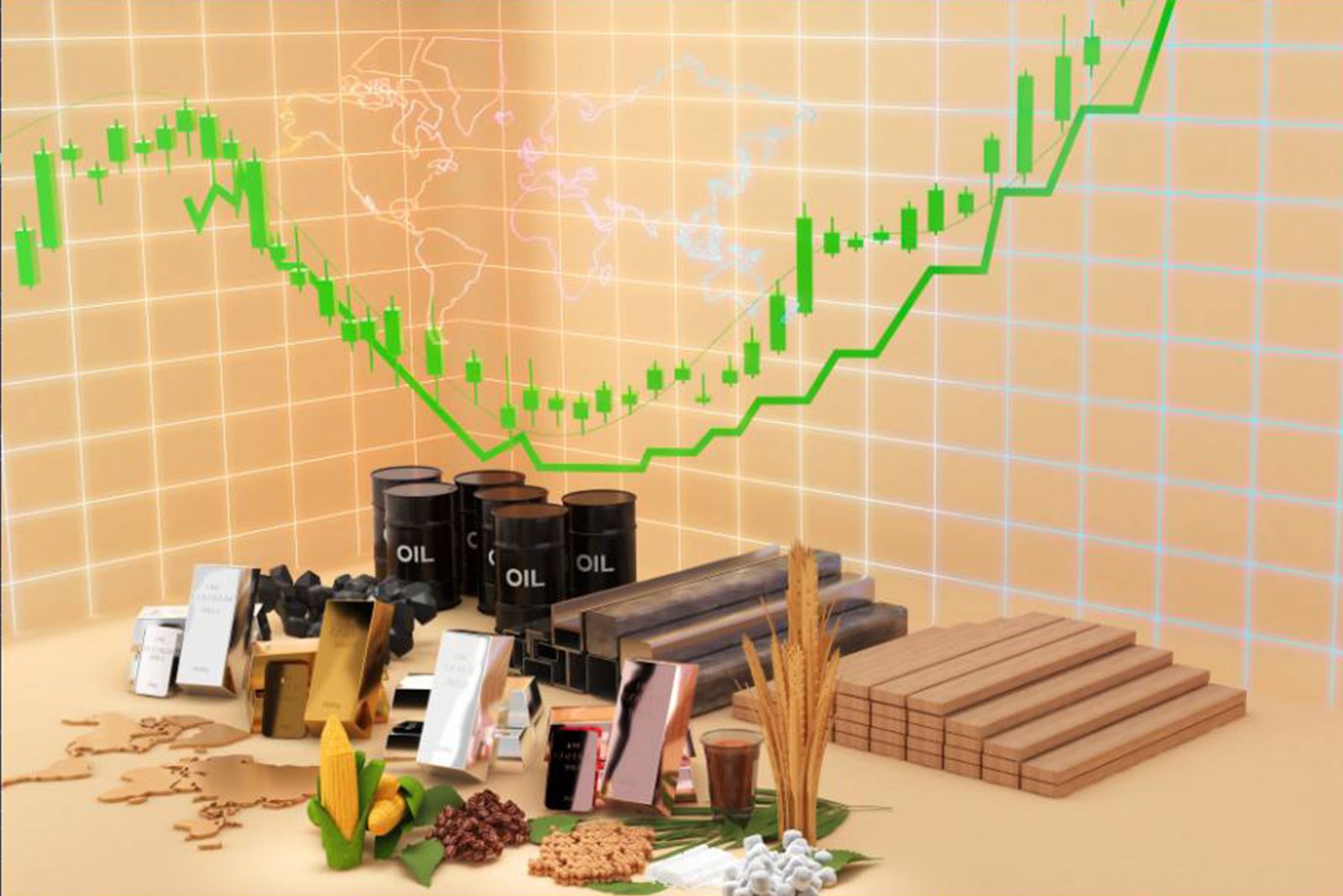
The correlation between oil and gold, the dollar, and the stock market Gold hit a new high, oil prices are also rising, crude oil and the US dollar, gold, the stock market, which seems to have little correlation, but its internal but inextricably linked. The stock market is positively correlated with oil prices When a falling stock market is a sign of a bad economy, a bad economy means less demand for ️ oil. When there are fewer people to buy crude oil and supply exceeds demand, the price of oil will naturally fall, and vice versa. The dollar has an inverse correlation with crude oil In addition to the oil price denominated in US dollars, the United States itself is the world's largest demand for crude oil ️ inflationary pressure brought by rising crude oil prices will bring depreciation pressure on the US dollar, and the direct result of the depreciation of the US dollar is that the price of crude oil denominated in US dollars will also rise. On the contrary, lower oil prices are a good sign for the economy. Confidence in the American economy will push up the value of the dollar, causing oil prices to fall further. Gold is positively correlated with crude oil ️ The rising oil price means that inflation will follow and the uncertainty of economic development will increase. However, gold is a hedge against inflation. At this time, the role of gold as a hedge against inflation will be favored by people. So when oil goes up, gold goes up. When oil goes down, gold goes down.
2024-03-26
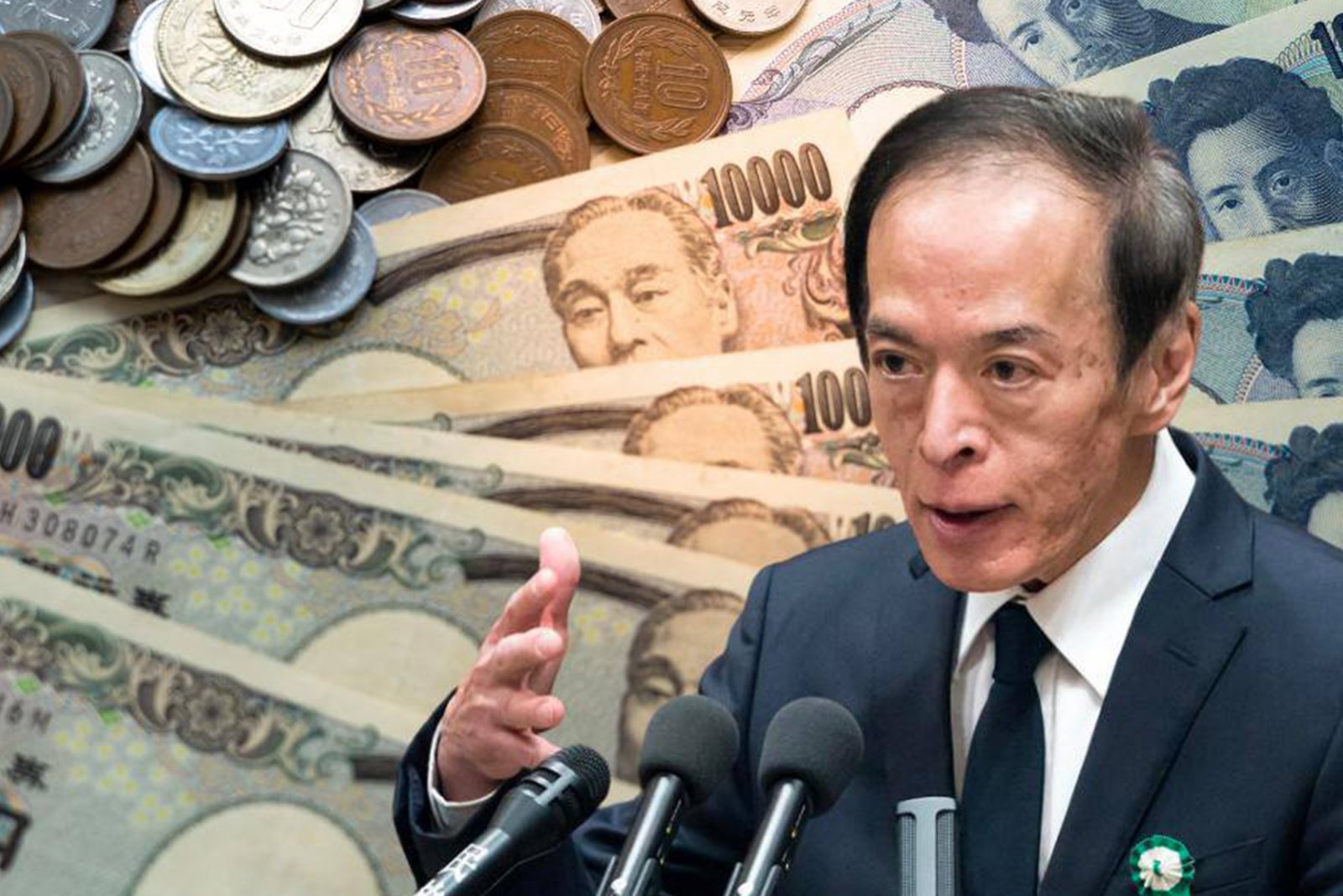
What is the impact of Japan's interest rate hike on asset markets? Japan as one of the world's largest economies, the yen is also one of the world's major currencies, the Bank of Japan to end the negative interest rate policy and quantitative easing adjustment, the abolition of 10-year Japanese government bond yield curve control, stop buying Japanese ETF and Japanese real estate (J-REIT) measures, what impact may be on the asset market? Since 2020, the interest rate of Japan is much lower than that of other countries. Investors will make spread trade through the spread trade, that is, investors will lend funds in countries with low interest rate 🪄 and invest in countries with high interest rate to earn the spread. A large part of the world's funds have been invested in this trading market and have obtained rich returns due to the increase of interest rate in Japan and the impact of exchange rate changes. Hot money from around the world would flood back into Japan and in the short term could have a ripple effect in global money markets, leading to a global capital shakeout. Developing country Developing countries that rely on Japanese capital will be negatively affected, especially until the tightening cycle in the United States is over, and capital outflows from emerging markets could lead to financial crises in some countries. Bond market Japan is the largest holder of U.S. debt and when investors withdraw from global bond markets such as U.S. Treasuries, it affects the global bond market. Yield rise Removing the YCC policy, under which the BOJ kept yields low by buying long-term government bonds, would mean interest rates would be more dependent on supply and demand, potentially pressuring longer-term government bond prices ️ yields rising. Japanese stock market The removal of ETF and REITs purchases means that the Bank of Japan has reduced its support for the stock market, which could have a negative impact on Japanese stocks It is important to note that Japan is only ending the era of negative interest rates rather than ending the era of low interest rates, so the impact on Japanese and global asset markets will be limited for the time being.
2024-03-19
Can Bitcoin's record high replace gold? Bitcoin (BTC) has risen above $72,000, a new high in more than 2 years once again set off a bitcoin boom. Since Federal Reserve Chairman Powell said that "Bitcoin could become an alternative to gold," the spot Bitcoin ETF was approved by the US Securities and Exchange Commission (SEC) and the increasing correlation between Bitcoin and gold, the market has also begun to compare bitcoin's substitution for gold in terms of safe-haven asset attributes. How Bitcoin is linked to gold It will increase significantly from 2021:28% before 2022 ️ 34% after 2022 ️ up to 47% in 2023. As the correlation between bitcoin and gold increases, it is further closer to the property of gold to some extent. However, there are still many differences which can be explored by the following points: volatility The measure of volatility is the Average True Range of Volatility (ATR), which describes how much the market has moved on average over a given period of time. In most cases, Bitcoin's volatility is much greater. Stored procedure As a physical asset, gold is kept in small amounts in vault bank safes and personal safes. On the other hand, Bitcoins cannot be stored in the traditional sense, but are stored in a secret number called a "private key" if you don't use a hardware or software wallet to protect your private key, buying bitcoins can be very dangerous. Source of demand In contrast to the 7,000-year history of gold as a tangible asset, the drivers of demand for Bitcoin are easy to identify, the current societal demand for Bitcoin is less well-defined and tends to revolve around price speculation buy-and-hold strategies and the underlying blockchain technology itself. So far, the status of gold has remained unassailable, but some people have accepted Bitcoin, while others and central banks still embrace gold, which means the beginning of the coexistence era.
2024-03-12
Gold topped the record high and its influencing factors. Gold broke through the top and hit a new high. The price broke through 2195 per ounce, only one step away from the 2200 mark. Will gold continue to rise? Refer to several important key periods and historical highs of gold in the past, and the factors affecting the price of gold: The dollar broke away from the gold standard (1971) When the American economy was in a downturn, President Nixon suddenly announced that he would stop the exchange of gold and the dollar, that is, the Nixon shock ended the gold standard. Floating exchange rate system (1973) Major developed countries in the world switched to floating exchange rate system, when the dollar depreciated and the price of gold soared to $100 an ounce. QE quantitative easing policy first appeared (2008) In 2008, the financial crisis broke out in the United States. In order to save the American economy, the Federal Reserve announced that it would reduce the interest rate to zero, and even pushed QE policy for the first time. The price of gold rose to $1,000 per ounce. Federal Reserve Policy and European Debt Problem (2011) In addition to continuous QE, the debt problem in Europe also affected the rise of safe-haven gold to $1,925 per ounce at that time. COVID-19 Epidemic and Sino-US Trade War (2020) At the end of 19th century, the global COVID-19 outbreak pushed the price of gold to rise continuously, and with the further deterioration of Sino-US relations in the past 20 years, the price of gold rose to $2,075 per ounce. Ukrainian-Russian War (2022) In the tense military relations between Russia and western countries, the demand for hedging in the market has increased greatly, and the price of gold has once again exceeded the $2,000 mark per ounce. What are the main factors affecting the price of gold? Economic crisis/war Gold has traditionally been regarded as a safe haven tool. When there is a war or economic crisis, common investment tools such as stocks will be impacted and funds will flow to gold. inflation When inflation is too high, the real income of stocks, bonds or real estate is greatly weakened, and investors tend to transfer some funds into gold to maintain the value of the overall assets. interest rate Gold itself is a non-breeding commodity. As long as the interest rate rises, the price of gold will fall. On the contrary, if the interest rate falls, the price of gold as a commodity will rise.

2024-03-05
What exactly is homeopathic trading and contrarian trading? Which is more profitable? Which is more risky? How to judge which one you are suitable for? What is homeopathic trading? Also known as right-hand trading, the trading strategy is the same as the market direction. The weak are always weak, the strong are always strong, buy high and sell higher! Advantages of homeopathic trading: It takes less time to enter the market gradually when there is a breakthrough signal, which can clearly grasp the general trend and reduce the transaction risk. When the trend disappears, it begins to exit, and it is easier to avoid the big crash. The capital turnover rate is relatively high. Disadvantages of homeopathic trading: Enter the market only because of a clear breakthrough, and enter the market only because of a clear breakthrough. You can only eat the middle in disguise. If the fluctuation in the middle is not big enough and the profit margin is less, some accumulated losses are quite large. What is contrarian trading? Also known as left-hand trading, investors presuppose that the current trend is about to reverse and try to profit from it, and establish a transaction that is opposite to the current market trend to buy low and sell high! Advantages of contrarian trading: Easy to buy at a relatively low point, the transaction cost is relatively low, and the profit margin is large. If you can bear the risk of fluctuation, the winning rate is generally higher. Disadvantages of contrarian trading: Personal subjective prediction is high. If the market falls, the bottom is an abyss and the time cost is high. This trading strategy is contrary to human nature. The more you fall, the more you invest, so you need to have considerable funds and strong psychological quality. There is no standard answer to that question, but whether it suits you or not. People with higher risk tolerance can go in and out against the trend, while those with lower risk tolerance can choose to trade with the trend.
2024-02-27
The relationship between quantity and price determines whether it is worth investing. Many investors will judge whether a product/stock is worth investing from the price volume, that is, the relationship between quantity and price. It can be roughly divided into the following three categories: Relationship between quantity and price of trend type: 1. Increase in volume and price: It means that the market is active and attracts many new buyers. 2. Volume contraction and price decline: it means that both the price and the volume of transactions continue to decrease, and the market is deserted, with a trend of continuous weakening. Deviation of quantity and price: 1. Volume decreases and price increases: it is a trend at the beginning of the trend, but if it appears in a trend that has already increased for a long period, it means that the transaction decreases and the future trend may weaken and reverse downward. 2. Volume increase and price decrease: the contradiction between the two parties may form a strong selling pressure if it is at the beginning of the downward trend, but if it is after a period of sharp decline, it may be a reversal of the upward signal. Consolidation or unclear volume-price relationship: 1. Quantity parity rises: kinetic energy may not last for a long time, and it is easy to enter the consolidation period. 2. Volume parity decline: it means that the trend is downward but there is a certain degree of continuous trading, and the trend is in a less clear consolidation. 3. Price increase and price leveling: It means that there may be rising opportunities for buyers and sellers to pull hard. But if the breakthrough goes up or down, it may form a new trend. 4. Quantity parity: buyers and sellers are in a wait-and-see atmosphere with high uncertainty. 5. Volume reduction and price leveling: the price changes little, the transaction volume decreases, and the future uncertainty is high. Pay attention to whether the product/stock price is worth investing, and consider other factors besides the relationship between quantity and price in order to evaluate it effectively.

2024-02-20
Copper-to-gold ratio as an index to judge business cycle. Copper-Gold Ratio is the ratio of copper price to gold price in English, which means how many ounces of gold are needed to buy one ounce of copper. It is often used as an indicator to judge the global business cycle. Copper-gold ratio calculation formula: Copper price per ounce/gold price per ounce = copper-gold ratio "copper" It is an important industrial metal, which is mostly used in industry, and more than 65% of it is used in construction and electronic products. Therefore, when the global economy grows rapidly, the performance of copper price is strong, so copper price is regarded as a leading indicator of global prosperity. "gold" It is a typical hedge and anti-inflation asset, which has little to do with industry, and its price is mainly affected by interest rates and inflation expectations. The rise in the price of gold usually represents an increase in worries about the economic recession. Therefore, when the economic recession or geopolitical factors break out, the price of gold often performs well, and when the economy is prosperous, the price of gold tends to be flat or fall. Relationship between copper-gold ratio and business cycle; When the economy recovers or enters the growth stage, The demand for copper has increased, and the price growth rate has surpassed that of gold, so that the ratio of copper to gold has increased. When the economy eases or enters the recession stage, the demand for copper decreases, and the demand for safe haven of gold increases. The price performance of copper is weaker than that of gold, which makes the ratio of copper to gold decrease. The ratio of copper to gold does not have a long-term absolute high or low point, but as a relatively short-term change, it is still of reference value.
2024-01-30
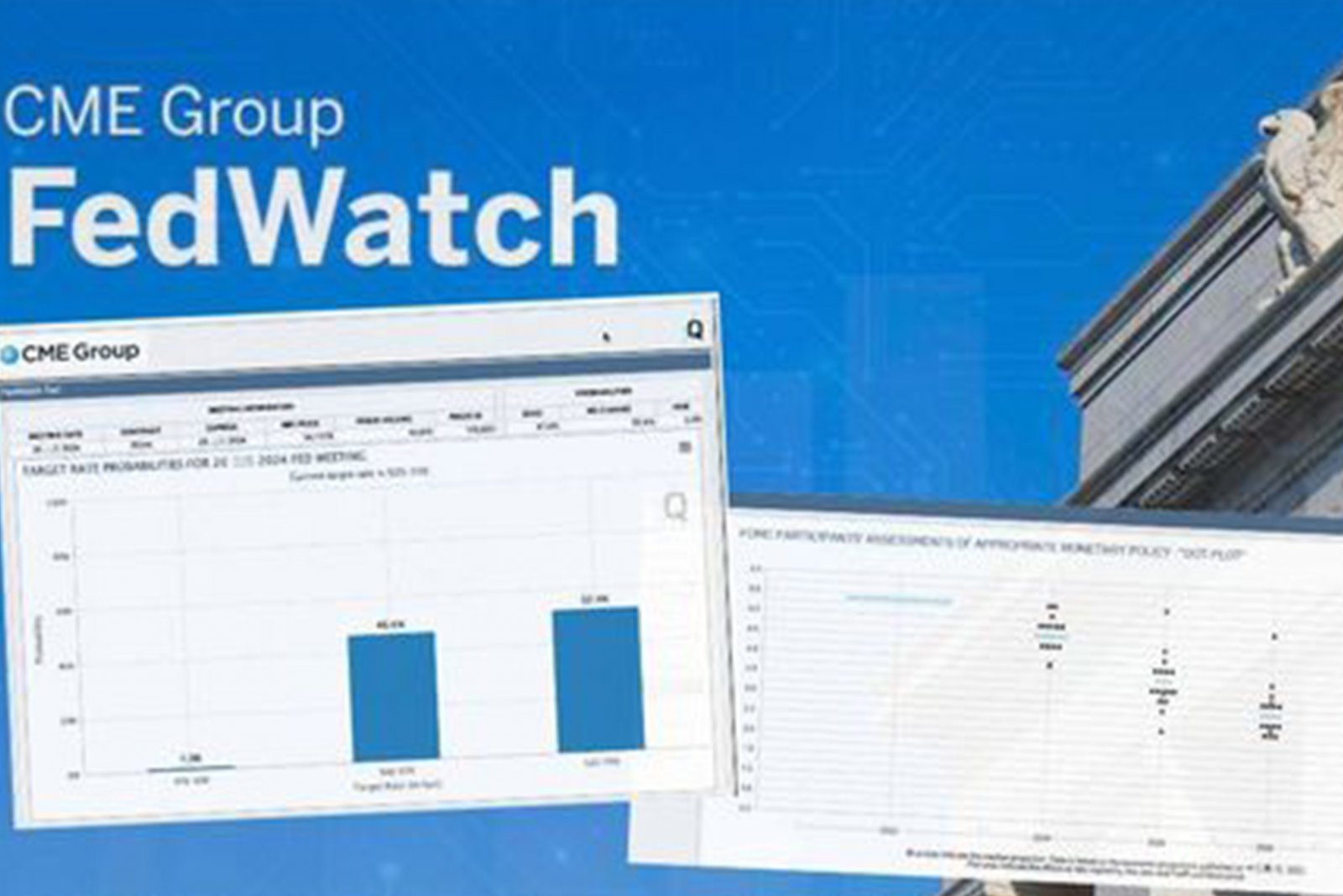
Is it accurate to predict that the Fed will raise interest rates, cut interest rates and raise interest rates? This week will usher in the first FOMC interest rate meeting in 2024, and the expected interest rate of the market will remain unchanged at 5.5%. Investors can make predictions through FedWatch before the results of interest rate negotiation are announced. What is FedWatch? FedWatch is a tool website of Chicago Mercantile Exchange (CME Group), which is mainly used to analyze the possibility of adjusting interest rates at FOMC's future meetings. How does FedWatch calculate? CME uses the Federal Funds Future, that is, it uses the expectation of interest rate in the trading market to calculate the probability of interest rate increase or decrease. Subtract the futures price from 100 to get the implied interest rate of the current month. Subtract it from the current benchmark interest rate and you can get the spread. Finally, divide the spread by 1 yard (0.25%) You will get the probability of increasing and decreasing interest rates in that month. Is FedWatch accurate in forecasting? According to historical data, it is predicted that the probability of raising interest rates from 2016 to 2019 is as high as 80%, and the interest rate trend has indeed been upward. After the second quarter of 2019, it is expected that the probability of reducing interest rates will be as high as 100%, and the actual interest rate trend is also highly accurate as a whole. The official website of CME also contains the Fed bitmap, so that users can clearly understand the expectations of all FOMC members on the Fed target interest rate and can easily find out the probability of raising interest rates and lowering interest rates in the next few FOMC meetings, which is a leading indicator worthy of reference.
2024-01-23
Are there advantages and disadvantages of negative interest rate policy to stimulate the economy? The Bank of Japan started to discuss interest rates today. The market expects that there will be no major policy changes at the meeting and the "negative interest rate policy" will be maintained. What is the negative interest rate attack strategy? The Bank of Japan implemented it in early 2016, and the central bank reduced the policy interest rate to "negative", so the reserves deposited by banks in the central bank could not receive interest but had to pay "penalty interest". How to affect depositors? Depositors deposit money in the bank without interest, and the bank also charges interest on depositors. Suppose the interest rate is negative 1%, and deposit $100, and after one year, it will only be net $99. How to stimulate the economy? 1. Bank deposits to the central bank must pay interest. 2. Forcing banks to increase lending to enterprises and individuals 3. Promote investment and consumer demand 4. Achieve the goal of stimulating the economy What are the disadvantages of negative interest rates? Bank profits are under pressure Interest income decreased, lending margin narrowed, and interest margin narrowed, which hit the banking industry. Asset bubble The capital flows to different assets to make assets bubble, and when the interest rate returns to normal, the bubble may burst. currency devaluation Negative interest rates devalue the country's currency, which is good for exports, but the situation continues, and countries are afraid of falling into a vicious circle of competition. Deposit reduction Negative interest rates drive away depositors, and the funds that banks can borrow also shrink. The emergence of the "negative interest rate policy" is to stimulate the Japanese economy. When the Japanese economy continues to cool down, the Bank of Japan needs to examine whether to cancel the "negative interest rate policy", which will stimulate the yen to strengthen.

2024-01-16
Sam's law predicts economic recession To know whether the economy will fall into recession, since 1970, there has been a 100% accurate measurement index called Sam's Law, which has not been missed so far. The Sam's Law was discovered by Claudia Rae Sahm, the current chief economist of the Federal Reserve: What is Sam's Law? She found that when the three-month moving average of the unemployment rate in the United States, minus the low unemployment rate of the previous year, exceeds 0.5%, it means that the economy is going through a recession stage, which is consistent with this situation in every recession stage in the United States since 1970. Therefore, the indicator was named Sam's Rule recession indicator (Sam's Law). Shortcomings of Sam's rule decline index; Overprediction: Sam's rule recession index is 100% accurate, but since the 1960s, it has predicted 13 economic recessions, but actually there are only 9 recessions. Delay: Four of the recent recessions were predictions; Two times occurred almost simultaneously with the economic recession; Once it was even behind the economic recession. Is the great recession coming? According to Sam's Law, as of December 2023, this figure has increased by 0.23 percentage points, indicating that the United States is extremely unlikely to have fallen into recession.
2024-01-09
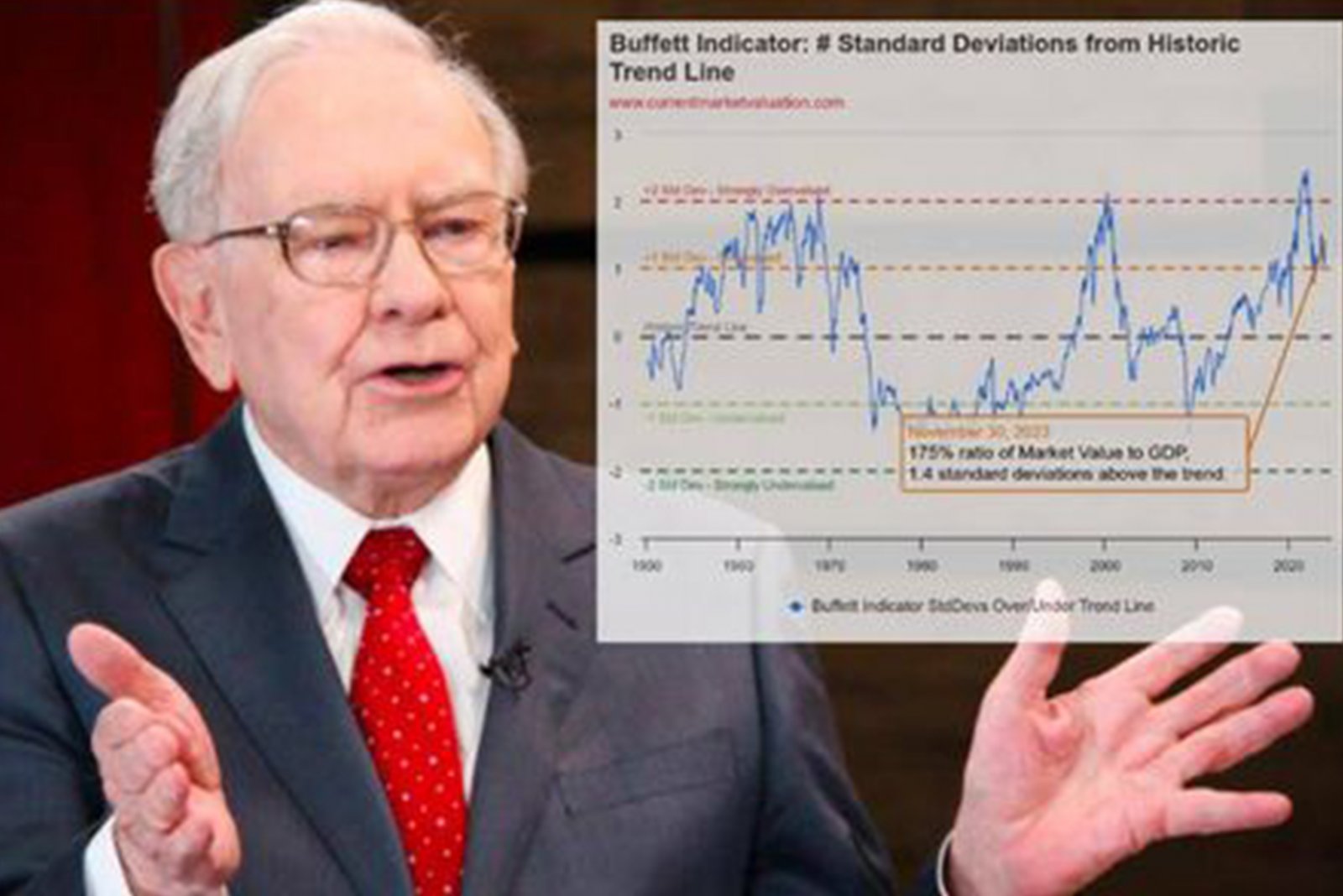
Buffett Indicator was put forward by the famous investor Buffett in 2001, claiming to be the best single indicator to measure the stock market valuation at any time. It is a percentage obtained from the total market value, gross national product (GNP) or gross domestic product (GDP), which can judge whether the stock market is overvalued or undervalued, and is applicable to stock markets everywhere. GDP and GNP Take the United States as an example, the difference between GDP and GNP is that GDP means that as long as all the output is counted in the United States; As for GNP, Americans will be counted if they produce abroad. However, because the actual difference between GDP and GNP is within 1%, the mainstream market usually uses GDP to calculate later. Five grades of ratio: Buffett indicator 100% represents a reasonable valuation of US stocks. Buying stocks at 70% or 80% may have a good return. 114% to 134% is slightly overestimated. More than 134% is a serious overestimation. Buying stocks at 200% is like playing with fire. What is the latest Buffett indicator? The Buffett Index broke through 200% in August 2021 and rose to a high level at the end of the year. It began to decline in 2022, with a low of about 150% during the year, and rose again in 2023. Recently, it rose to more than 170% to 180%, which was more than 50% higher than the historical trend level, and it was about 171% as of January 2024, reflecting that the US stock market was seriously overheated. Buffett indicator is questioned. In addition to the delay in GDP data, non-stock assets, such as bonds, real estate and gold, have not been assessed. More people question that it is out of date. When Buffett's index was first published, many constituent companies were in manufacturing, retail and energy industries. Today, the largest companies in the United States are in science and technology industries. At present, the price of the stock market fully reflects internationalization, but GDP only evaluates the production in the United States, causing the numerator (total market value) to rise, while the denominator (GDP) is not affected. How should investors use it? Buffett indicator can be used as a supplementary valuation tool, and it is also one of many emotional indicators in the market today. Others, such as VIX volatility, fear and greed index, are more used not as a tool to find trading opportunities, but to tell you the market situation and future expectations, and use it to predict whether the market is overvalued.
2024-01-02
Cut interest rates in 2024? Jerome Powell, chairman of the Federal Reserve, said earlier that the interest rate hike may have been completed, but other Fed officials gave different answers on when it might start to cut interest rates. Who should decide the Fed to cut interest rates? The Fed has a mechanism to discuss interest rates. It is not up to one person to decide how much to increase or decrease interest rates. It is the Open Market Committee (FOMC) under the Federal Reserve that is responsible for negotiating interest rates, but 12 of them are responsible for deciding interest rates. 12 people with voting rights Federal reserve chairman Vice chairman of the federal reserve 5 executive members Federal Reserve Bank of new york 4 voting seats (The remaining 11 regional Federal Reserve Bank presidents rotate annually) President of the Federal Reserve Bank of the Non-voting Region Will still attend the FOMC meeting Participate in discussions, contribute opinions and provide reference. Forecast the views of future interest rate hikes and gather them into a bitmap. If an official with voting rights makes a speech, it is more worthy of attention.

2023-12-26
At the end of 2023, the overall economy or international politics in 2023 has undergone drastic changes, which have had an impact on the stock exchange and derivative financial products in the financial market. Let's review the three major events in 2023 together. Chat GPT detonated the concept of generative AI. The upsurge of artificial intelligence concept has led technology giants to launch a series of large-scale models one after another. OpenAI released ChatGPT-4 and GPT-4 Turbo. Google launched a new generation of large-scale language model PaLM2. Facebook launched DialoGPT Plus. Meta introduced a brand-new large-scale language model Llama. China's mainland technology giants have also triggered a competition called "Thousand Models War". Alibaba released a thousand questions about Tongyi Baidu launched ERNIE Bot. Tencent released a mixed model and so on. The popularity of ChatGPT-related concept stocks soared. Us dollar interest rate hike triggers banking crisis. On March 10th, 2023, Silicon Valley Bank (SIVBQ) suddenly declared bankruptcy, and its share price dropped from US$ 160 to US$ 0.2. The news that it was finally forced to withdraw from the market triggered global concerns about the survival of the banking industry and a crisis of confidence. Two days later, another well-known bank, Signature Bank(SBNY), also declared bankruptcy. Four major financial institutions, including Bank of America, Morgan Stanley, Citigroup and Wells Fargo, suffered losses of $52 million. The banking crisis gradually spread in mid-March. Credit Suisse, a veteran financial giant, was finally acquired by UBS at a price of 50% off and a "cheap price" of $3 billion. Share prices of European banks such as BNP Paribas and Deutsche Bank also fell. Bankruptcy of banks has caused great losses to the accounts of ordinary people, and these events have also sounded the alarm for financial regulators. The Palestinian-Israeli conflict is heating up, and the price of gold and oil is rising. The largest Palestinian-Israeli conflict in the past 20 years, followed by sharp fluctuations in international oil prices, the price of safe-haven assets gold rose, the Middle East stock market once fell across the board, while US military and energy stocks rose sharply. After the Russian-Ukrainian war, this conflict brought new uncertainties to global stability, and market confidence was hit, which led to the rise of risk aversion. In Europe and the United States, where stock markets generally fell, military and energy stocks rose against the market. At the same time, the long-term interest rate of American bonds soared and the price of gold with safe-haven properties began to rise again.

2023-12-19
When the interest rate hike cycle comes to the end, the market usually starts to expect the interest rate cut, and people expect that the economy will have a beautiful period of moderate growth, low interest rate, low inflation and low unemployment rate, that is, the blonde girl economy. What is the blonde economy? Goldilocks Economy is an economic term derived from fairy tales, which refers to moderate economic growth, low unemployment rate, low inflation and low interest rate during this period. At this time, not only the real living standard has improved, but also the performance of the financial market usually shows a moderate and stable increase, so investors will expect the blonde girl's economic period to be as long as possible. Economic conditions of blonde girls Low and mild inflation Low and sufficient interest rate level Low unemployment rate Steady growth of GDP The rise in asset prices Is the blonde economy a good phenomenon? Goldilocks economy symbolizes the slow growth of the economy. With appropriate economic data and monetary policy, it is the investment opportunity that many investors dream of. In fact, growth is only a thin line from economic recession, and it is easy to make the economy step into recession due to unexpected events or policy mistakes. Therefore, we should pay close attention to the trend of economic data. Be prepared for danger in times of peace so as not to be deceived by the unpredictable financial market!

2023-12-12
Data information is an indispensable factor in fundamentals. Investors will use financial calendars to pay attention to the economic performance of countries, and the development of data will be a major guide for future investment. What does the financial calendar contain? How does it help investors? Most financial calendars contain the following information and functions: Future and past economic events and indicators in most major countries Data release and time Data importance Actual value, Forecast value and Previous value of the data. Need to pay attention to: Most investment markets pay attention to the gap between the predicted value and the final result of the data, rather than comparing it with the previous result. Less important data often does not have the expected value. The expected value will be inconsistent in different financial calendars. Because the expected value in the market belongs to survey statistics, it is an interval set by economists and market participants, and different calendars may take different median values as reference. How does it help investors? Increase profit opportunities When investors trade at this time because of the fluctuation caused by data, they can increase their profit opportunities, but the corresponding risks are essentially equal. Hedging effect For conservative investors, financial calendars can be used to avoid risks. For example, try not to trade before the release of heavy economic data, or try to take profit and leave before the release of data. Using past data to predict future trends Tracking the data changes in the past few times can also view the detailed basic statistics and predictive function of the data. There is also a financial calendar on Mingde website. It is also printed with the 2024 financial calendar for free collection. (Limited quantity while stocks last) Help investors to be "risk-proof" and "preemptive"

2023-12-05
In the American market, investors often hear the "four witch days curse". It is said that the stock price will drop sharply every four witch days. Is this true? What exactly is Four Witches Day? What is the impact on investors? What is Four Witches Day? "Four Witches Day" is Quadruple witching day in English. It has four days every year, which is the third Friday in March, June, September and December in the US market, and the last Four Witches Day in 2023 is on December 15th. During the four witch days, the market price will fluctuate greatly because of the "settlement date" of derivative financial products in the American market. The derivative financial products settled are: stock index futures, stock index options, individual stock futures and individual stock options. Impact on the market? It is also because the above four kinds of derivative products are due, so investors in the market need to close their positions, or switch positions to contracts with further maturity dates, which also causes the week of four witch days, so the market transactions will be very hot, the fluctuations will be more intense, and the trading volume will be much larger. Impact on investors? According to the historical experience, the Four Witches Day has no obvious influence on the long-term price, so long-term investors need not worry too much, but short-term traders must pay special attention to the situation of the Four Witches Day, especially in the week after the Four Witches Day, the fluctuation of the US stock market will be more intense, providing more profit space and higher operational risks. The stock price fell sharply on the fourth witch day? The historical trend chart of S&P 500 in recent years shows that the trading volume increases greatly every four witch days, but it does not mean that the stock price index will perform better. According to statistics, the rising probability of each index is usually higher in the week before the four witch days. However, after the end of the four witch days, the decline probability of each index will also increase.
2023-11-29
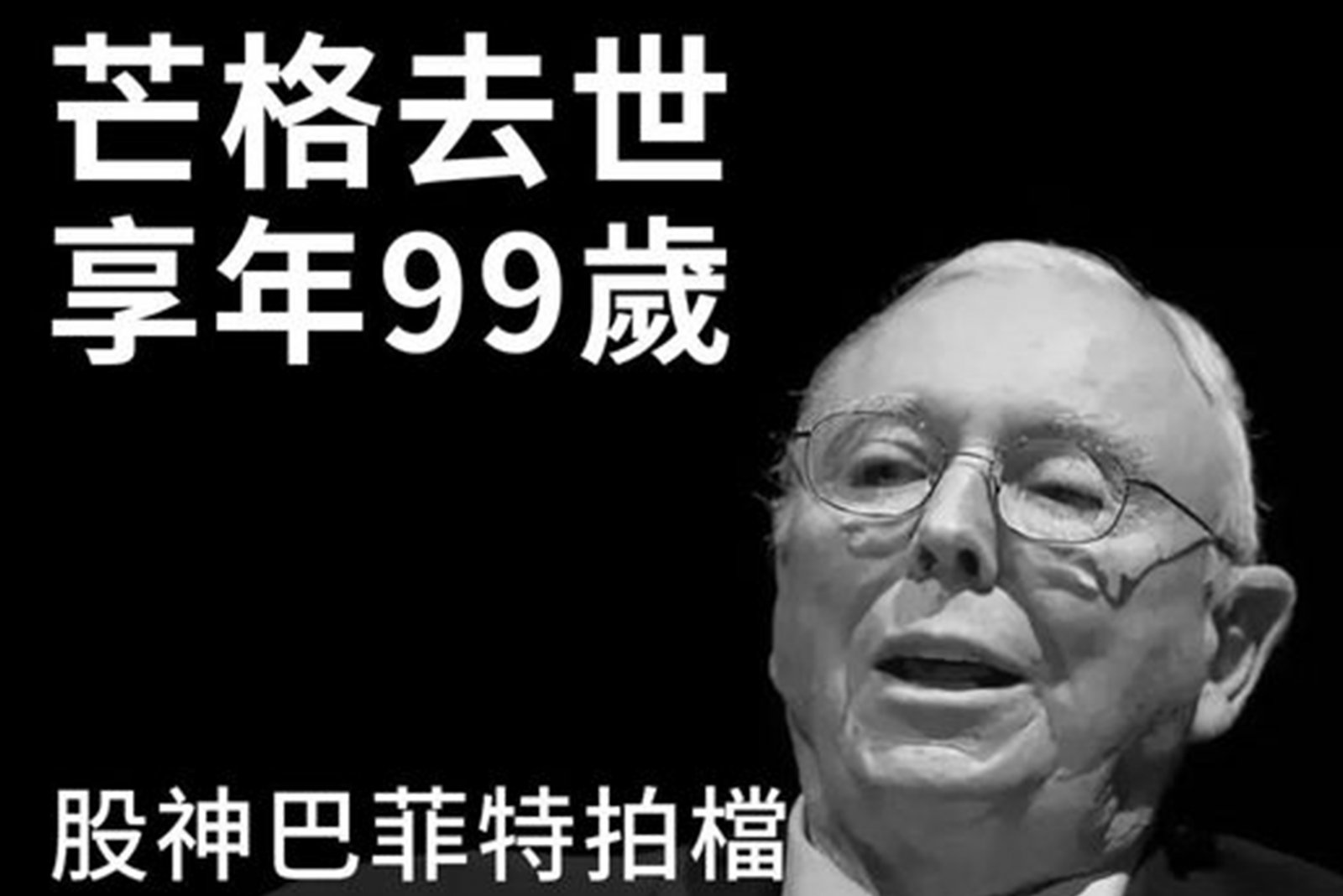
Charlie Munger, Warren Buffett's good partner and vice chairman of Ba County, died peacefully in a hospital in California at the age of 99. Buffett issued a statement mourning his friends, saying that without Munger's inspiration, wisdom and participation, Ba County could not have reached today's high position. Munger's remarks not only inspired Buffett, but also wrote books on investment and educated countless investors. Born on January 1, 1924, Munger was seven years older than Buffett. When he was young, he worked in Buffett and Son, a grocery store run by Buffett's grandfather. Munger and Buffett met in 1959 and became best friends. With Buffett's cooperation for many years, Ba County has become an investment flagship, with a market value of 780 billion US dollars and a share of more than 540,000 US dollars, which is a family heirloom of investors. Forbes estimates that Munger's net worth is $2.5 billion, and Buffett's wealth is $117 billion. Munger left many aphorisms that with enough models, 90% of the world's problems can be solved with design. His motto is also full of financial wisdom. He once said: "People with character will take cash and do nothing. I can achieve today because I am unwilling to be mediocre. There are two kinds of mistakes in life, one is doing nothing, and the other is choosing something beautiful in a pile of things to buy. "


